Water damage is one of the most common causes of mold growth in homes and commercial buildings across Tampa Bay. When moisture enters walls, flooring, or insulation, mold can begin developing surprisingly fast. In Florida’s humid climate, the conditions are often ideal for mold to spread within 24 to 48 hours after a leak, storm, or flood.
Recognizing the early warning signs of mold after water damage is critical for protecting both your property and the health of everyone inside. Visible mold, persistent musty odors, and unexplained respiratory symptoms are often the first indicators that moisture problems have turned into a mold issue.
For property owners in the Tampa Bay area, working with experienced professionals can make all the difference. Suncoast Mold & Restoration, led by Kevin Renner, a mold remediation specialist with more than 15 years of hands on experience, provides expert mold inspection, removal, and water damage restoration services designed to identify the source of moisture and safely eliminate contamination.
Understanding what to look for early can help prevent a minor moisture issue from becoming a much larger mold remediation problem.
Early Signs of Mold Growth After Water Damage
Mold rarely appears overnight in a clearly visible form. In many cases it begins growing in hidden areas such as behind drywall, under flooring, or inside HVAC systems. Because of this, homeowners often notice secondary signs before they actually see mold.
Some of the most common indicators include:
- visible mold patches on walls, ceilings, or baseboards
- a persistent musty or earthy odor in certain rooms
- water stains or discoloration after leaks or flooding
- peeling paint, warped drywall, or bubbling surfaces
- increased allergy or respiratory symptoms indoors
If these signs appear after a plumbing leak, roof damage, or storm flooding, mold may already be developing inside the structure.
Professionals like Suncoast Mold & Restoration in Tampa Bay use advanced moisture detection tools and inspection techniques to locate mold growth that may not be visible to the naked eye.
Visible Mold Growth and Surface Indicators
One of the most obvious signs of mold is visible growth on building materials. Mold colonies can appear in several colors and textures depending on the species and the materials they are growing on.
Common appearances include:
- black or dark green spotting on drywall or ceilings
- white or gray fuzzy patches on wood or insulation
- green or brown staining on tile grout or bathroom walls
- spreading discoloration around water damaged areas
Mold often begins in corners, along baseboards, or near plumbing fixtures where moisture accumulates.
However, visible mold usually represents only part of the problem. If mold is growing on a surface, there is often additional growth hidden behind walls or within building materials. That is why professional mold remediation companies perform full structural inspections rather than simply cleaning what is visible.
Water Stains and Discoloration That Signal Mold Risk
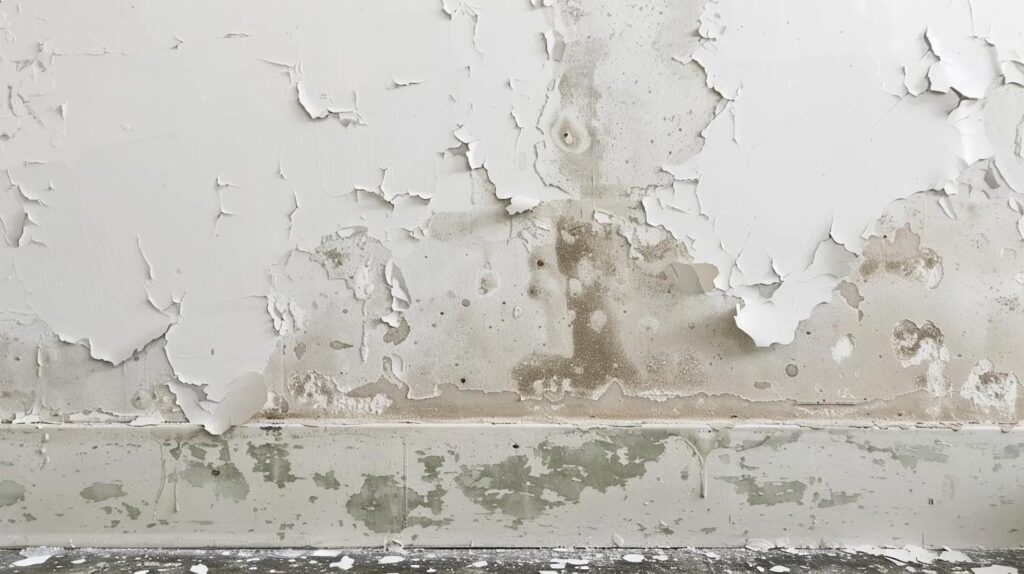
Even if mold has not yet appeared on surfaces, water stains often signal that conditions are right for mold growth.
Watch for signs such as:
- yellow or brown staining on ceilings after roof leaks
- dark patches forming on drywall near plumbing fixtures
- warped or bubbling paint on walls
- soft or deteriorating drywall after flooding
These changes typically indicate that moisture has penetrated building materials. When this occurs, mold can begin developing within insulation, framing, or drywall layers that are not immediately visible.
Musty Odors and Hidden Mold Growth
One of the most reliable indicators of hidden mold is a persistent musty smell.
This odor is caused by microbial volatile organic compounds released by mold as it grows. These gases often accumulate in enclosed spaces such as wall cavities, crawlspaces, and air ducts.
Homeowners frequently notice musty smells in areas like:
- bathrooms and laundry rooms
- basements or crawlspaces
- closets located on exterior walls
- rooms that recently experienced flooding or leaks
If the odor returns quickly after cleaning or ventilation, mold may be present inside building materials or HVAC systems.
Experienced remediation specialists like Kevin Renner and the Suncoast Mold & Restoration team are trained to trace odor patterns and identify the exact location of hidden mold contamination.
Health Symptoms That May Indicate Mold Exposure
Mold exposure can affect people differently depending on sensitivity levels, existing respiratory conditions, and the amount of mold present in the environment.
Common symptoms associated with mold exposure include:
- persistent coughing or wheezing
- nasal congestion or sinus irritation
- sneezing and allergy like reactions
- itchy or watery eyes
- headaches or fatigue
- skin irritation in sensitive individuals
For individuals with asthma, allergies, or compromised immune systems, mold exposure can significantly worsen symptoms.
If multiple household members begin experiencing similar symptoms indoors, particularly after water damage, mold contamination may be present.
How Professional Mold Inspection Works
After water damage, a professional mold inspection is often the safest way to determine whether mold is present and how extensive the problem may be.
A comprehensive inspection typically includes:
Moisture detection
Specialized meters are used to locate hidden moisture inside walls, flooring, and structural materials.
Visual assessment
Technicians examine areas commonly affected by leaks, flooding, or condensation.
Air and surface sampling
Samples may be collected to determine mold concentration and identify species present.
HVAC inspection
Air systems are checked to determine whether mold spores may be circulating through the building.
Companies like Suncoast Mold & Restoration in Tampa Bay combine these diagnostic methods with years of field experience to develop an effective remediation plan.
Why Professional Mold Testing Is More Reliable Than DIY Kits
Many homeowners attempt to test for mold using store bought test kits, but these methods rarely provide reliable information.
DIY kits often fail to:
- identify hidden mold sources
- measure indoor air quality accurately
- determine the severity of contamination
- distinguish between harmless and harmful mold species
Professional inspectors use calibrated equipment and follow industry standards to determine whether mold remediation is necessary.
When to Schedule a Mold Inspection After Water Damage
Timing is critical when dealing with moisture problems.
Property owners should consider scheduling a professional inspection if:
- water damage occurred within the last 48 hours
- musty odors are present after flooding or leaks
- drywall or flooring remains damp
- health symptoms appear after a water event
- visible mold growth begins appearing indoors
Addressing moisture problems quickly can significantly reduce remediation costs and prevent structural damage.
The Mold Remediation Process
Effective mold remediation involves far more than simply cleaning visible mold.
Professional remediation typically includes several key steps.
- Moisture source identification – Leaks, drainage problems, or humidity issues must be corrected before removal begins.
- Containment of affected areas – Barriers and negative air pressure systems prevent mold spores from spreading during cleanup.
- Removal of contaminated materials – Heavily affected drywall, insulation, or flooring may need to be safely removed.
- Air filtration and dehumidification – Specialized filtration systems remove airborne spores while dehumidifiers restore proper moisture levels.
- Final inspection and clearance – The area is evaluated to confirm that mold has been effectively removed.
With more than 15 years of experience in mold remediation and water damage restoration, Kevin Renner and the Suncoast Mold & Restoration team follow proven remediation practices designed to restore safe indoor environments.
Preventing Mold Growth After Water Damage
Preventing mold from returning requires addressing both moisture control and indoor air quality.
Property owners can reduce risk by:
- repairing leaks immediately
- maintaining indoor humidity between 30 percent and 50 percent
- using dehumidifiers in damp areas
- ensuring proper ventilation in bathrooms and kitchens
- inspecting areas prone to flooding or storm damage
In Florida’s humid climate, routine inspections are often the best way to catch moisture problems early.
Why Tampa Bay Property Owners Trust Suncoast Mold & Restoration
Mold problems require more than basic cleanup. They require expert diagnosis, proper containment procedures, and proven remediation methods.
Suncoast Mold & Restoration has built a reputation throughout the Tampa Bay area for providing reliable mold remediation and water damage restoration services. Under the leadership of Kevin Renner, a mold remediation specialist with over 15 years of field experience, the company focuses on identifying the root cause of mold problems and restoring safe indoor environments for homeowners and businesses.
Suncoast Mold & Restoration has built a reputation throughout the Tampa Bay area for providing reliable mold remediation and water damage restoration services. Under the leadership of Kevin Renner, a mold remediation specialist with over 15 years of field experience, the company focuses on identifying the root cause of mold problems and restoring safe indoor environments for homeowners and businesses.From initial inspection to complete remediation, their team provides the expertise needed to handle mold problems safely and effectively.
If you suspect mold growth after water damage, acting quickly can help prevent further damage and protect your indoor air quality. Contact us today to schedule a professional inspection and remediation plan tailored to your needs.
Frequently Asked Questions
How quickly can mold grow after water damage?
Mold can begin growing within 24 to 48 hours after water damage occurs, particularly in humid environments like Tampa Bay. When building materials remain damp, mold spores already present in the air can quickly begin multiplying.
What are the first signs of mold after a water leak?
Early signs of mold often include musty odors, water stains on walls or ceilings, peeling paint, or visible mold spots. If these signs appear after flooding or plumbing leaks, mold may already be developing inside building materials.
Can mold grow behind walls without being visible?
Yes. Mold frequently develops in hidden areas such as behind drywall, under flooring, inside insulation, or within HVAC systems. Because of this, homeowners may notice musty smells or health symptoms before mold becomes visible.
Is mold dangerous to breathe in?
Mold exposure can cause coughing, sinus irritation, sneezing, itchy eyes, headaches, and fatigue. People with asthma, allergies, or weakened immune systems may experience stronger reactions to mold spores.
When should you call a professional mold remediation company?
Professional mold remediation is recommended when mold covers a large area, keeps returning after cleaning, or appears after water damage. A professional inspection can identify hidden mold growth and determine the safest removal process.
What does professional mold remediation involve?
Professional mold remediation includes identifying the moisture source, isolating contaminated areas, removing mold damaged materials, filtering airborne spores, and restoring safe humidity levels in the building.
Can mold return after remediation?
Mold can return if the underlying moisture problem is not corrected. Proper remediation focuses on both removing mold and fixing the conditions that allowed it to grow in the first place.
Need Help with Mold or Water Damage?
Don’t wait until mold spreads or water damage worsens. Reach out to the experts at Suncoast Mold & Restoration for professional mold remediation and water damage restoration services.